


In a nutshell
2026 was a year of volatility in the credit markets. Overall, euro credit’s outperformance versus government bonds is almost nil in investment grade (-0.1%) and negative in high yield (-0.9%). Global growth is holding up, with a forecast of 3.2% for 2027, even though we see downside risks. This resilience is preserving the health of corporate balance sheets.
However, the volatility in the credit markets was generated by three factors:
1. Energy shock
The war against Iran, which broke out in late February, caused a rise in energy prices. Brent went from about $61 in January to a peak of $126 in April, before falling back to around $70 in early July, then rising again from the end of the summer to around $100 a barrel. It came back to around $92 in mid-November. For Europe, a net importer, the shock is weighing on growth, and eurozone inflation reached 4% in October, its highest level since September 2023. Europe’s dependence on its energy supplies has kept the geopolitical risk premium high. This dependence remains a point of fragility for euro spreads.
2. Rising sovereign bond yields
The European Central Bank (ECB) carried out two interest rate hikes in 2026, in response to the energy shock caused by the conflict in the Middle East. At 2.50%, this rate is at the top of the range that economists estimate to be neutral. The market nevertheless continues to anticipate two further rate hikes. In this context of volatility in sovereign bond yields, investors have been more cautious about buying the long end of the curves. Higher rates also weigh on the capital structure of the most heavily indebted companies, which is adding to the pressure on the most fragile issuers.
3. AI
Investments in AI have supported growth, especially in the United States, but the positive momentum they provide is being called into question. For one thing, hyperscalers have turned heavily to debt. Furthermore, recent weeks have also been marked by tensions in the equity markets. The Nasdaq lost 10% over the week, its worst result since March 2020, and wiped out all of its gains for the year. Nvidia has fallen by almost 50%. Three drivers combined: (I) rate hikes and doubts about the return on AI spending, (II) fears that the Democratic victories in the midterm elections will slow the construction of data centers, and (III) the change in Nvidia’s leadership, which is leading to an immediate tightening of Nvidia’s investment and financing policy. This change in governance calls into question hundreds of billions of dollars of financial commitments that had until now underpinned the entire artificial intelligence ecosystem.
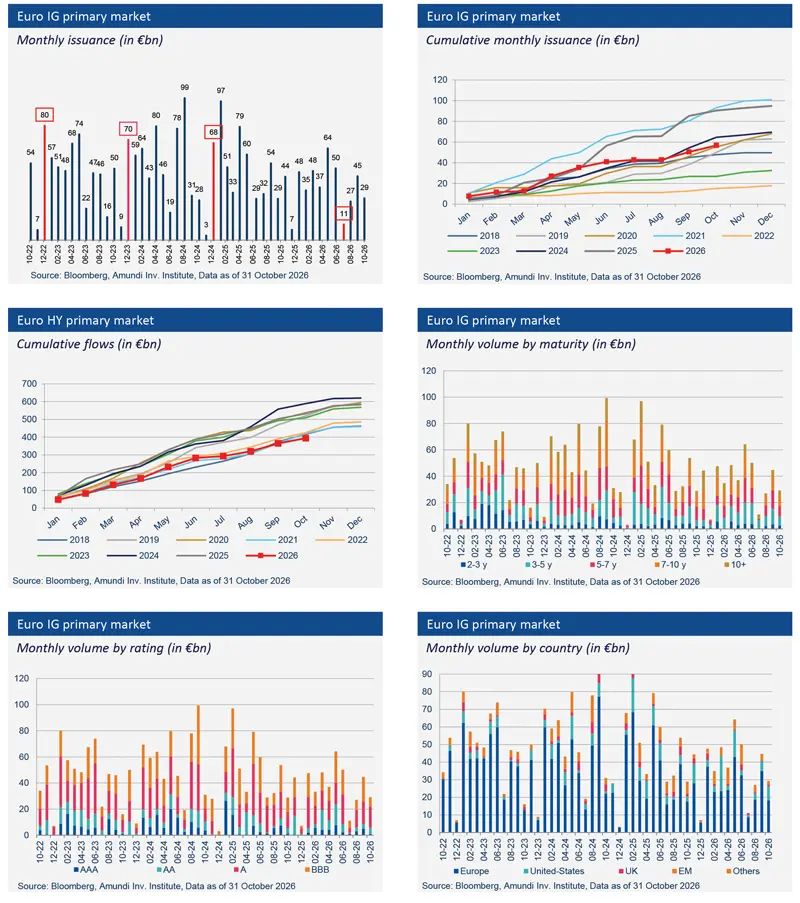
Primary market Investment Grade
Market data
Explore our liquidity solutions offering